2026 Top Internal vs External Fixation What is the Difference?

Time:2026-04-29 Author:Liam
0%

In the realm of orthopedic surgery, the choice between internal and external fixation is critical for effective treatment. A recent report by the American Academy of Orthopaedic Surgeons highlights that approximately 10% of patients require some form of fixation during recovery. This statistic underscores the importance of understanding "What is the difference between internal and external fixation?"

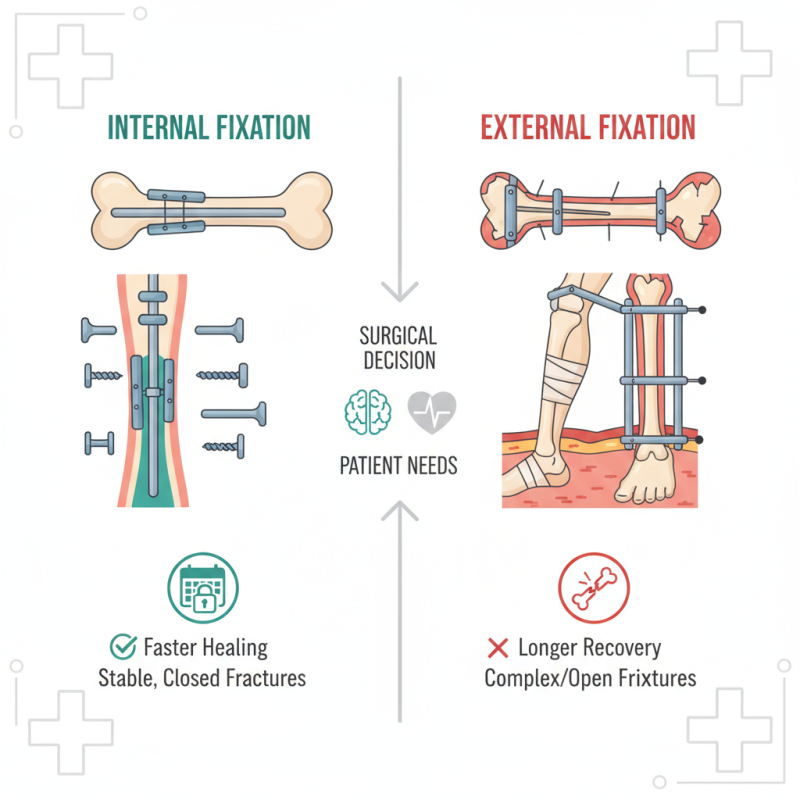
Internal fixation involves the use of plates, screws, or rods surgically inserted inside the body. This method is preferred for stable, closed fractures and can lead to quicker healing times. Conversely, external fixation uses devices placed outside the body. This option is often necessary for complex fractures, especially in cases where internal fixation isn’t viable.

Despite their benefits, each technique has challenges. Internal fixation carries risks of infection and complications during surgery, while external fixation may lead to discomfort and longer recovery times. As the field evolves, understanding the nuanced differences aide surgeons in making informed decisions tailored to individual patient needs.
2026 Top Internal vs External Fixation What is the Difference?

Overview of Internal and External Fixation Methods

Internal and external fixation are two primary methods used in orthopedic surgery to stabilize bone fractures. Each method has unique characteristics suited for different types of fractures. Internal fixation involves surgically implanting devices, such as plates and screws, inside the body. A report from the Journal of Orthopaedic Research states that internal fixation typically leads to quicker healing times and better functional recovery in patients. However, surgical risks, including infection and complications, remain.

External fixation, on the other hand, employs a framework that is attached outside the body. This method is less invasive and often used for complex fractures, such as open fractures or when there's significant soft tissue damage. According to a study published in the Journal of Bone and Joint Surgery, external fixation is highly effective in managing critical bone defects but can present challenges, like pin site infections.

Both techniques show promise but are not without limitations. Some patients may experience discomfort with external fixators due to their design. Moreover, internal fixation requires careful planning to avoid nerve or vessel damage during implantation. Understanding the nuances of these fixation methods is essential for optimal patient care.

Key Differences Between Internal and External Fixators

When considering fixation methods for fractures, internal and external fixators play a crucial role. Internal fixators, such as plates and screws, are placed inside the body to provide stability. They require surgical intervention for placement. This offers the advantage of a more stable environment for healing. However, they also come with risks, including infection and complications during surgery.

External fixators, on the other hand, attach outside the body. They consist of rods and pins that stabilize fractures without the need for invasive surgery. This method allows for adjustments post-operation, which can be vital for aligning bones. Nevertheless, the visibility of these devices can lead to discomfort and complications, such as pin site infections.

In practice, the choice between internal and external fixation depends on factors like the location and type of fracture. Each method has its benefits and drawbacks. Surgeons must carefully evaluate patient needs to determine the best approach. This decision-making process often includes reflecting on past experiences with both methods. Understanding these differences is essential for optimal patient outcomes and improved recovery.

Indications for Using Internal Fixation

Internal fixation is a common surgical method used to treat fractures. This technique involves the placement of internal devices, such as plates and screws, to stabilize broken bones. According to the American Academy of Orthopaedic Surgeons, internal fixation is often indicated for complex fractures, particularly in patients with significant displacement or comminution. The goal is to facilitate early mobilization and restore function.

One key aspect of internal fixation is its application in specific scenarios. For instance, intra-articular fractures typically benefit from this method, as it allows for precise alignment. Studies indicate that approximately 75% of patients with complex fractures achieve improved outcomes compared to external fixation. However, complications like infection at surgical sites can occur. It is essential to weigh these risks against the benefits.

While effective, the internal fixation approach is not without challenges. Proper surgical technique is crucial to reduce complications. Not every fracture warrants internal fixation; some may heal better with external methods. Ongoing research aims to enhance techniques and materials, ensuring better patient outcomes. Health professionals must continuously evaluate the appropriateness of internal fixation for individual cases.

When to Choose External Fixation Over Internal Fixation

When it comes to choosing between external and internal fixation, understanding the context is crucial. External fixation is often preferred for severe fractures that are complex or difficult to treat. The external device offers direct access to the injury site, making it easier to manage. However, it can be bulky and may cause discomfort. Patients often struggle with the visibility of the external device, which requires ongoing care and maintenance.

In contrast, internal fixation involves placing hardware inside the body. This technique can provide better stability for certain fractures. However, it requires surgical expertise and has a longer recovery time. There are risks, such as infection or hardware failure. Choosing the right method often depends on the patient's specific condition and overall health status. It’s essential to weigh these factors carefully, as each option has its own set of challenges. Understanding these nuances can help in making informed decisions for optimal recovery.

2026 Top Internal vs External Fixation: What is the Difference? - When to Choose External Fixation Over Internal Fixation

Feature Internal Fixation External Fixation
Stability High stability, suitable for complex fractures Moderate stability, adjustable during healing
Surgical Approach Invasive, requires surgical implantation of hardware Less invasive, applied externally to the limb
Healing Time Generally quicker
(4-8 weeks, depending on fracture type)
Can be longer
(6-12 weeks, adjustments may be needed)
Complications Risk of infection and hardware-related issues Lower risk of internal infection, but external site may become infected
Postoperative Care Requires monitoring of surgical site and hardware Requires regular maintenance of external apparatus
Indications Ideal for stable fractures, joint reconstructions Ideal for open fractures, fractures complicated by soft tissue damage
Patient Mobility Usually allows for early mobilization May restrict mobility depending on configuration

Pros and Cons of Internal vs External Fixation Techniques

When considering fixation techniques in orthopedics, understanding the pros and cons of internal vs. external fixation is vital. Internal fixation involves placing hardware inside the body, often providing stable support and allowing for faster healing. Surgeons can offer a more aesthetic outcome since hardware is hidden. However, complications such as infection or hardware failure can arise. These issues may lead to the need for additional surgeries.

External fixation, on the other hand, holds bones together from outside the body. It’s useful for severe fractures or deformities. This method allows for easy access to wounds for cleaning and monitoring. However, it can be uncomfortable and may lead to complications like pin site infections. The visibility of external devices may also affect a patient's self-image, creating psychological impacts.

Tips: When choosing a fixation method, consider your lifestyle and comfort level. Communicate with your surgeon about risks and benefits. Also, reflect on the potential need for further treatment. Understand that every method has its challenges, and knowledge will empower your decisions. Embrace the process and stay informed.

FAQS

: What is internal fixation?

: Internal fixation is a surgical method that stabilizes broken bones using devices like plates and screws.

When is internal fixation recommended?

It's often indicated for complex fractures, especially with significant displacement or comminution.

What are the benefits of internal fixation?

It allows for early mobilization and generally leads to improved outcomes in complex fractures.

Are there risks associated with internal fixation?

Yes, complications like infection at the surgical site can occur, so the benefits must be weighed against risks.

What are the advantages of external fixation?

External fixation provides direct access to the injury site, making management easier for severe, complex fractures.

What challenges does external fixation present?

It can be bulky and uncomfortable, requiring ongoing care and maintenance, which can be difficult for patients.

How does recovery time differ between internal and external fixation?

Internal fixation often requires a longer recovery time due to the surgical nature of the procedure compared to external methods.

Can all fractures be treated with internal fixation?

No, some fractures may heal better with external methods; the choice depends on the individual case.

What factors influence the choice between fixation methods?

The specific condition of the fracture and the overall health of the patient are crucial in making this decision.

Is there room for improvement in fixation techniques?

Yes, ongoing research aims to enhance surgical techniques and materials for better patient outcomes.

Conclusion

The article "2026 Top Internal vs External Fixation: What is the Difference?" provides a comprehensive overview of two primary methods used in orthopedic surgery: internal and external fixation. It highlights their key differences, such as the location of the fixation devices and their implications for healing and stability. Internal fixation is often indicated for fractures requiring stable alignment and support, while external fixation is preferred for complex injuries or when surgery is not immediately feasible.

Moreover, the article discusses when to choose one method over the other, detailing the pros and cons associated with each technique. Understanding "what is the difference between internal and external fixation" is crucial for clinicians to make informed decisions based on the specific needs of their patients and the nature of the injuries being treated.

Liam

Liam

Liam is a dedicated marketing professional with a profound expertise in the industry, where he excels at highlighting the unique advantages of our core products. With a keen understanding of market trends and consumer needs, Liam frequently updates our company’s professional blog, providing......