How to Choose the Best Elbow Replacement System in 2026

Time:2026-11-05 Author:Oliver
0%

Choosing an elbow replacement system in 2026 is not a catalog exercise. The right choice depends on the patient’s diagnosis, bone quality, ligament stability, activity needs, and surgical history. A system that suits an older patient with severe inflammatory damage may not fit a younger person with post-traumatic bone loss. Small details matter: stem length, component sizing, implant constraint, and the instruments available in the operating room.

For an expert perspective, the work of orthopedic surgeon Bernard Morrey remains influential in elbow reconstruction. His research underscores a practical principle: implant selection must reflect the patient’s anatomy and the stability the reconstruction needs. This is a paraphrase, not a direct quotation. It also points to a difficult truth. No design is best for every elbow.

This guide explains How to select elbow replacement systems by comparing linked and unlinked designs, materials, fixation options, and evidence on durability. It also considers surgeon experience, manufacturer support, and the risks of complications such as loosening, infection, or nerve problems. Ask what the device is designed to address. Ask how its outcomes were measured. And ask what the plan is if the first choice does not fit the patient’s bone or soft tissues. Those questions can feel basic. They are easy to miss when a product brochure looks convincing. A careful decision should combine current clinical evidence with the surgeon’s judgment and the patient’s goals.
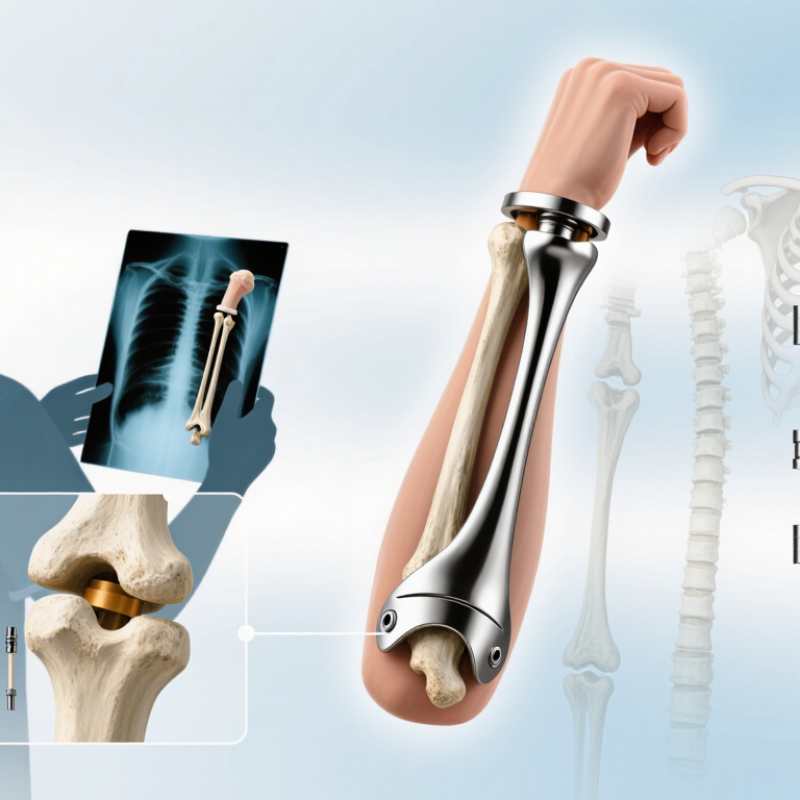
How to Choose the Best Elbow Replacement System in 2026

Understand Elbow Replacement Systems and Their Main Types

How to Choose the Best Elbow Replacement System in 2026

Understand Elbow Replacement Systems and Their Main Types

Elbow replacement systems differ in how they connect the upper-arm and forearm components. Linked, or semi-constrained, systems join them with a hinge. This can help when ligaments or bone are badly damaged, but the hinge also transfers force to the implant. Unlinked systems rely more on intact ligaments and careful soft-tissue balance. They allow more natural movement, yet may be unsuitable when the elbow is unstable. Distal humeral replacement replaces the lower end of the upper-arm bone while preserving the forearm joint surface. It may suit selected fractures, but it is not interchangeable with total elbow replacement. Fit matters.

Registry data deserve careful reading. The Australian Orthopaedic Association National Joint Replacement Registry’s 2024 report tracks elbow replacement revisions over time; published registry cohorts show that implant survival can fall to around 80% by ten years. That figure is not a personal forecast: age, diagnosis, bone quality, activity, and follow-up length all affect results. A heavy hinge may feel reassuring on a scan, but everyday lifting still places stress on the joint. Ask a surgeon which system matches the damaged structures, what movement is realistic, and how local revision data were measured. I would not choose by implant category alone; even experienced teams can disagree when bone loss and ligament damage overlap.

How to Choose an Elbow Replacement System in 2026

Understand the main design difference: linked and unlinked elbow replacement systems.

Linked systems connect the implant components to provide mechanical stability. Unlinked systems do not; their stability depends more on functioning collateral ligaments and suitable bone support. These are general design characteristics, not a ranking of outcomes. The best option depends on the patient’s anatomy, bone quality, ligament function, and the surgeon’s assessment.

Assess the Diagnosis, Bone Quality, and Functional Goals

How to Choose the Best Elbow Replacement System in 2026
Assess the Diagnosis, Bone Quality, and Functional Goals

Choosing an elbow replacement starts with understanding the reason for surgery. A replacement for severe arthritis may require different planning than one following a complex fracture. The surgeon should review imaging, ligament stability, prior operations, and any infection history. Diagnosis narrows the options, but it does not decide alone. The same system may not suit every elbow.

Bone quality helps determine how securely an implant can be fixed. X-rays, and sometimes CT scans, can show thin bone, fractures, or bone loss. The surgeon also considers whether the elbow is stable enough for an unlinked design or needs added implant stability. Imaging is useful, but it cannot show everything. Some uncertainty remains, and that deserves an honest discussion.

Tips: Bring a list of daily tasks, such as dressing, cooking, or lifting a kettle. Ask which activities may need to change after surgery. Be specific about work, hobbies, and pain goals. “Normal use” means different things to different people. Pain relief matters, but so do realistic expectations and follow-up care.

Compare Linked and Unlinked Implant Designs

Linked and unlinked elbow replacements solve different mechanical problems. A linked implant connects the upper-arm and forearm components with a hinge, helping provide stability when damaged ligaments cannot reliably guide the joint. This can matter after severe fractures or when soft tissue support is poor.

The trade-off is that constraint transfers force to the implant-bone interface, where loosening or wear may develop over time.

An unlinked implant allows more natural movement between components, but depends on intact ligaments, accurate positioning, and balanced soft tissues. A loose ligament can let the joint shift or become unstable.

Small details matter: the surgeon assesses ligament function, bone loss, and whether the joint stays centered through a gentle range-of-motion test.

The UK National Joint Registry’s 2024 annual report tracks elbow replacement procedures and revisions over time; these real-world data help show durability, but do not prove one design is best for every patient.

Registry comparisons can also be affected by differences in patient condition and implant selection. That limitation is worth keeping in view.

Ask your surgeon which design fits your ligament stability and bone quality, and how their experience informs the choice. There may be no perfect option.

Evaluate Materials, Fixation Methods, and Potential Risks

Choosing an elbow replacement system in 2026 means matching its materials and fixation to your bone, activity level, and diagnosis. Metal components commonly use cobalt-chromium or titanium alloys, while a plastic bearing surface helps the joint move smoothly. Material choice is not a simple ranking. Ask your surgeon how the proposed design may affect wear, motion, and future revision options. Small details matter.

Fixation may use bone cement or rely on bone growing onto a porous implant surface. Cemented fixation can provide immediate stability, while uncemented fixation depends on suitable bone quality and healing. Your X-rays, prior operations, and bone condition help guide that choice. There is no universal best method. Recovery demands matter, too: repeatedly lifting heavy loads can place different stresses on an elbow than light household tasks.

Every system has trade-offs. Potential risks include infection, loosening, instability, bearing wear, nerve irritation, and fracture around the implant. Some problems appear early; others develop over time. Ask what warning signs need prompt attention and how follow-up will monitor the joint. The answer may feel less certain than expected. That is worth discussing, not ignoring. A second opinion can help if the proposed materials, fixation plan, or expected limits remain unclear.

Review Surgical Expertise, Rehabilitation, and Long-Term Follow-Up

How to Choose the Best Elbow Replacement System in 2026

Review Surgical Expertise, Rehabilitation, and Long-Term Follow-Up

Surgical Expertise

A suitable elbow replacement depends on more than the implant itself. Ask how often your surgeon performs elbow replacements and how they manage complications, including infection, nerve symptoms, or loosening. Experience matters. The UK National Joint Registry’s 2024 Annual Report tracks revision outcomes over time, including for elbow procedures. Ask your surgeon how their own results compare with registry data, and whether those figures reflect patients with similar conditions. Registry averages are useful, but they cannot predict one person’s recovery.

Rehabilitation

Rehabilitation should be planned before surgery. Your therapist can show how to support the arm, manage swelling, and begin gentle movement without stressing the joint. Many patients need gradual exercises for motion and daily tasks; progress may be uneven. That can be frustrating. Ask when you can safely dress, cook, and return to work, and request written lifting limits. Follow the care team’s specific instructions rather than copying another patient’s routine.

Long-Term Follow-Up

Long-term follow-up helps identify problems before they disrupt function. Confirm who will review your wound, range of motion, and imaging, and when those visits should happen. Registry reports measure revisions across years, not just early recovery, so ask about the plan beyond the first postoperative appointment. Be candid about missed exercises or new pain. One imperfect detail: follow-up schedules can feel repetitive, yet skipping them may leave small changes unnoticed.

FAQS

What should guide the choice of an elbow replacement system?

The diagnosis, bone quality, ligament stability, and daily goals all matter. A system suited to arthritis may not fit a complex fracture.

Which scans help assess bone condition?

X-rays can reveal fractures, thin bone, or bone loss. A CT scan may add detail, though imaging cannot show everything.

How do daily activities affect planning?

Tell your surgeon about tasks like dressing, cooking, lifting a kettle, and work duties. “Normal use” is personal.

What materials may an elbow implant use?

Metal parts may use cobalt-chromium or titanium alloys, with a plastic bearing surface. Ask how the design may affect wear and future revision options.

How is the implant fixed to bone?

Some implants use bone cement; others rely on bone growing onto a porous surface. Bone condition helps guide the choice. There is no universal best method.

What risks should I discuss with my surgeon?

Possible risks include infection, loosening, instability, wear, nerve irritation, and nearby fracture. Ask which warning signs need prompt attention.

How can I assess surgical experience and rehabilitation plans?

Ask how often your surgeon performs elbow replacements and manages complications. Request written exercise guidance and lifting limits. Progress can be uneven.

What should long-term follow-up include?

Confirm when your wound, arm movement, and imaging will be reviewed. Follow-up can feel repetitive, but small changes may otherwise go unnoticed.

Conclusion

Choosing the right elbow replacement system in 2026 starts with understanding the main implant types and matching them to the patient’s diagnosis, bone quality, activity level, and functional goals. A careful assessment helps determine whether a linked design, which provides greater built-in stability, or an unlinked design, which relies more on surrounding ligaments and bone, is more appropriate. The decision should also account for implant materials, fixation methods, and potential complications, including loosening, wear, infection, or instability.

How to select elbow replacement systems also depends on the surgeon’s experience and the patient’s capacity to follow a rehabilitation plan. Discussing expected recovery, activity limits, and long-term monitoring can help set realistic goals and support the best possible outcome. The final choice should be individualized through shared decision-making, with regular follow-up to assess function and implant durability over time.

Oliver

Oliver

Oliver is a seasoned marketing professional with a wealth of expertise in driving brand awareness and engagement. With a deep understanding of our company's product offerings, he consistently delivers high-quality content that enriches our professional blog. His insights not only shed light on......