Top 10 Tips for Choosing Hip Replacement Implants Safely

Time:2026-05-19 Author:Liam
0%

When considering hip replacement, choosing the right implants is crucial. Dr. Sarah Thompson, an orthopedic surgeon with over 15 years of experience, emphasizes, "The right implant can significantly impact recovery and long-term outcomes." Understanding how to choose hip replacement implants safely is essential for patients navigating this complex process.

Patients should research different implant types and brands. Many factors come into play, including materials used and the surgeon’s expertise. Consulting with a knowledgeable healthcare provider is vital. The right guidance can alleviate common concerns and boost confidence in the choice made. Keep in mind that not all implants suit every individual.

Moreover, it’s important to consider individual needs and activity levels. Some patients may not need the latest technology, while others might benefit from it. Reflecting on personal lifestyle and future activities can help in making informed choices. Ultimately, ensuring safety in selecting hip replacement implants requires a thoughtful approach and collaboration with experts in the field.
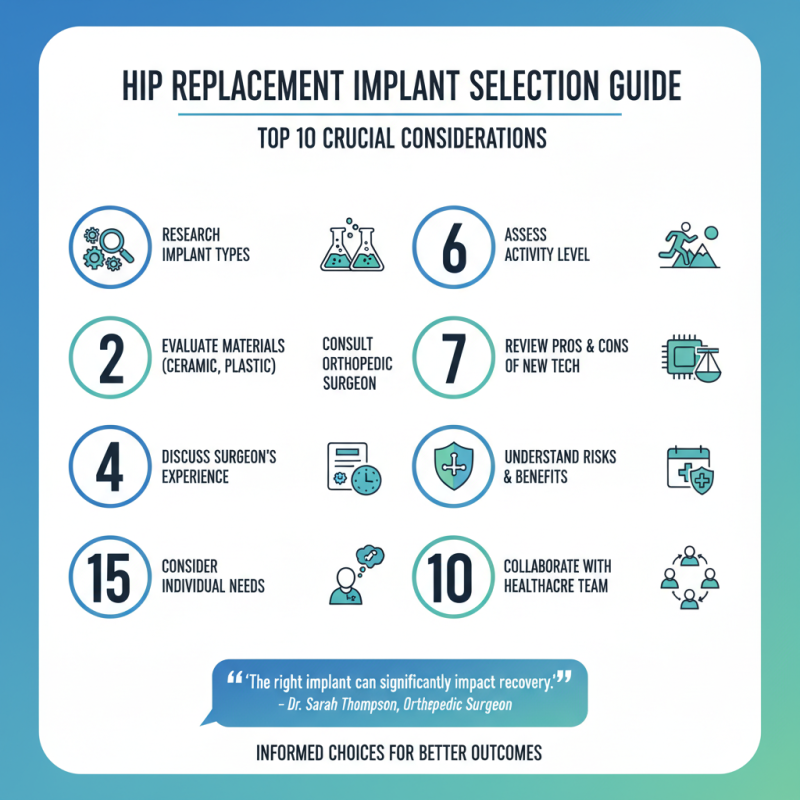
Top 10 Tips for Choosing Hip Replacement Implants Safely

Understanding Hip Replacement Implants: Key Factors to Consider

When considering hip replacement implants, understanding key factors is essential for a safe choice. Surgical expertise matters significantly. Seek surgeons with extensive experience in hip surgeries. They should be familiar with various implant materials and designs. Their knowledge can guide you to the best options for your needs.

Material selection is crucial. Different implants use materials like metal, plastic, or ceramic. Each type has its benefits and drawbacks. For example, ceramic implants may offer greater longevity but can be more brittle. It’s vital to discuss these aspects with your surgeon.

Think about the implant's design as well. Some are designed for greater mobility, while others focus on stability. Your lifestyle and physical activity level should influence your choice. Research reveals that patient outcomes vary based on implant type. The more informed you are about the implants, the safer your choice will be.

Top 10 Tips for Choosing Hip Replacement Implants Safely

Tip No. Factor to Consider Description Importance Level
1 Material Type Consider the metal, ceramic, or plastic options available. High
2 Patient's Age Younger patients may benefit from more durable implants. Medium
3 Activity Level Active individuals need implants that withstand higher stress. High
4 Surgeon Experience Choose a surgeon who has performed many successful implant procedures. High
5 Implant Longevity Research the lifespan of different implant types. High
6 Allergies Check for any known allergies to implant materials. Medium
7 Manufacturer's Reputation Research the history and reliability of the implant manufacturer. Medium
8 Regulatory Approvals Ensure the implant has the necessary FDA approvals. High
9 Cost and Insurance Understand the costs involved and what insurance covers. Medium
10 Post-Operative Care Know the required rehabilitation and follow-up care. High

Different Types of Hip Replacement Implants and Their Uses

When considering hip replacement implants, understanding the various types available is crucial. There are generally three categories of implants: metal-on-metal, ceramic-on-ceramic, and plastic. Metal-on-metal options can offer durability but may carry a risk of metal ion release. Ceramic-on-ceramic implants provide a low-friction surface but can be brittle. Plastic implants, often made from polyethylene, are common and tend to be less expensive.

Each type serves different patient needs. For active patients, metal-on-metal might be a fitting choice, yet its safety is still debated. Older patients might benefit more from ceramic options, as they can experience reduced wear over time. However, ceramic’s fragility can lead to fractures under certain conditions.

Selecting the right implant requires careful consideration of lifestyle and potential risks. Patient education is vital here. One should reflect on how their choices may impact their long-term health. Engaging in an open dialogue with a healthcare professional can help align implant choice with individual health conditions and activity levels.

Top 10 Tips for Choosing Hip Replacement Implants Safely

Evaluating Implant Materials for Longevity and Safety

When considering hip replacement implants, evaluating the materials is crucial. Research shows that implant longevity heavily relies on the type of materials used. According to a study by the American Academy of Orthopaedic Surgeons, metal-on-polyethylene implants can last up to 15 years. In contrast, ceramic-on-ceramic designs offer a potential lifespan exceeding 30 years. This significant difference highlights the importance of choosing the right implant material.

Tip: Always consult with a qualified orthopedic surgeon to discuss the best materials for your situation. Scientific literature supports the idea that personalized choices increase the likelihood of successful outcomes.

The safety of implant materials is another vital consideration. Some materials, such as cobalt-chromium alloys, may provoke allergic reactions in certain patients. A report published in the Journal of Bone and Joint Surgery indicates that a small percentage of recipients experience complications due to metal sensitivity. Balancing the risks and benefits of different materials cannot be overstated.

Tip: Inquire about biocompatibility when selecting an implant material. The longer the implant can perform without complications, the better the results for your mobility and overall well-being.

Consultation with Orthopedic Surgeons: Questions to Ask

When consulting with orthopedic surgeons about hip replacement implants, ask clear questions. Understand your condition and the reason for the surgery. What type of implant will be used? This question offers insight into the material and design chosen for you. Surgeons typically consider many factors, including your age and activity level.

Next, discuss the risks involved. What are the potential complications? Having an open conversation about risks will help you make a more informed decision. Surgeons may avoid mentioning some issues, so ensure you press for thorough answers.

Also, inquire about the recovery process. What can you expect post-surgery? Knowing the timeline for rehabilitation can ease anxiety. Ask about physical therapy options and the expected return to daily activities. Each patient’s journey is unique, and it’s essential to understand yours. Reflect on how your lifestyle will adapt after surgery. Building this knowledge provides clarity in navigating your treatment path.

Post-Surgery Considerations: Recovery and Follow-Up Care

Recovery after hip replacement surgery is a critical phase that requires careful attention. Patients often feel eager to return to normal activities. However, rushing the process can lead to complications. It is essential to adhere to your doctor’s recovery plan. Regular physical therapy aids in regaining strength and mobility. Each session builds upon the last, contributing to a successful recovery.

Post-operative care should not be overlooked. Monitor your incision for signs of infection, such as redness or swelling. Pain management is also vital. Follow prescribed guidelines and communicate any concerns to your healthcare provider. Discuss your progress during follow-up appointments. These visits are opportunities to adjust your recovery plan if necessary. Remember, every patient’s journey is unique, and patience is crucial. Managing expectations can ease anxiety as you navigate this healing process.

FAQS

: What types of hip replacement implants are available?

: There are three main types: metal-on-metal, ceramic-on-ceramic, and plastic.

Which implant type is suitable for active patients?

Metal-on-metal implants may suit active patients but have safety concerns.

How do ceramic implants compare in terms of wear?

Ceramic implants reduce wear better but can be brittle and fracture.

What should patients focus on when choosing an implant?

Consider lifestyle, potential risks, and long-term health impacts of your choice.

Why is discussing choices with a healthcare provider important?

An open dialogue helps align your implant choice with health conditions and activity levels.

How long can various implants last?

Metal-on-polyethylene implants last up to 15 years, while ceramic-on-ceramic designs may exceed 30 years.

What are the safety concerns with implant materials?

Some materials might cause allergic reactions or complications due to metal sensitivity.

What is crucial during the recovery phase post-surgery?

Follow your doctor's recovery plan and attend regular physical therapy sessions.

How should patients manage pain after hip replacement surgery?

Follow prescribed pain management guidelines and communicate with your healthcare provider.

What should patients look for during follow-up care?

Monitor incision signs, discuss recovery progress, and adjust plans as needed.

Conclusion

Choosing hip replacement implants safely involves understanding the various types available and their specific uses. Key factors to consider include the materials used in the implants, which significantly affect their longevity and safety. It is crucial to evaluate these aspects in consultation with orthopedic surgeons, where patients should prepare a list of important questions to ensure they are making informed decisions.

Post-surgery, recovery and follow-up care are vital components of the overall process, impacting the success of the implant. By understanding how to choose hip replacement implants safely, patients can enhance their prospects for a smooth recovery and optimal outcomes. Always engage with healthcare professionals to guide you through this essential healthcare journey.

Liam

Liam

Liam is a dedicated marketing professional with a profound expertise in the industry, where he excels at highlighting the unique advantages of our core products. With a keen understanding of market trends and consumer needs, Liam frequently updates our company’s professional blog, providing......