The global demand for joint replacement surgery has experienced exponential growth over the past decade, driven by aging demographic profiles, structural changes in active lifestyle preservation, and rising rates of degenerative osteoarthritis. Within the orthopedics sector, total knee arthroplasty (TKA) and unicompartmental knee arthroplasty (UKA) remain primary clinical standards. As healthcare systems strive to manage structural costs while ensuring positive long-term patient outcomes, medical device distributors and hospital procurement divisions require highly optimized, cost-efficient, and structurally reliable orthopedic implants.
In response to these market pressures, the medical manufacturing landscape has transitioned from proprietary, high-premium brand licensing to streamlined OEM (Original Equipment Manufacturer) and ODM (Original Design Manufacturer) partnerships. Strategic manufacturing partnerships empower global medical brands and regional suppliers to market high-tier joint prosthesis systems without undergoing capital-intensive infrastructural development.
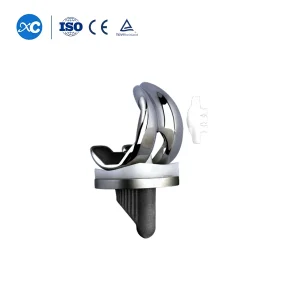
Developing high-performance knee replacement systems requires advanced materials science, biomechanical engineering expertise, and sterile-environment production capabilities. Modern knee prostheses comprise multiple interconnected components that mimic the complex kinematics of the human anatomical knee:
By working with specialized manufacturers, distributors gain access to sophisticated manufacturing processes, including CNC 5-axis precision milling, plasma-spray coating for porous surfaces (facilitating biological bone ingrowth), and class 10,000 cleanroom packaging systems.
Guangzhou Clerivida Medical Co., Ltd. is a leading manufacturer specializing in orthopedic implants and surgical instruments, offering a comprehensive model of research and development, production, sales, and export. The company has established a perfect quality management system and advanced production capabilities, ensuring every product meets international standards.
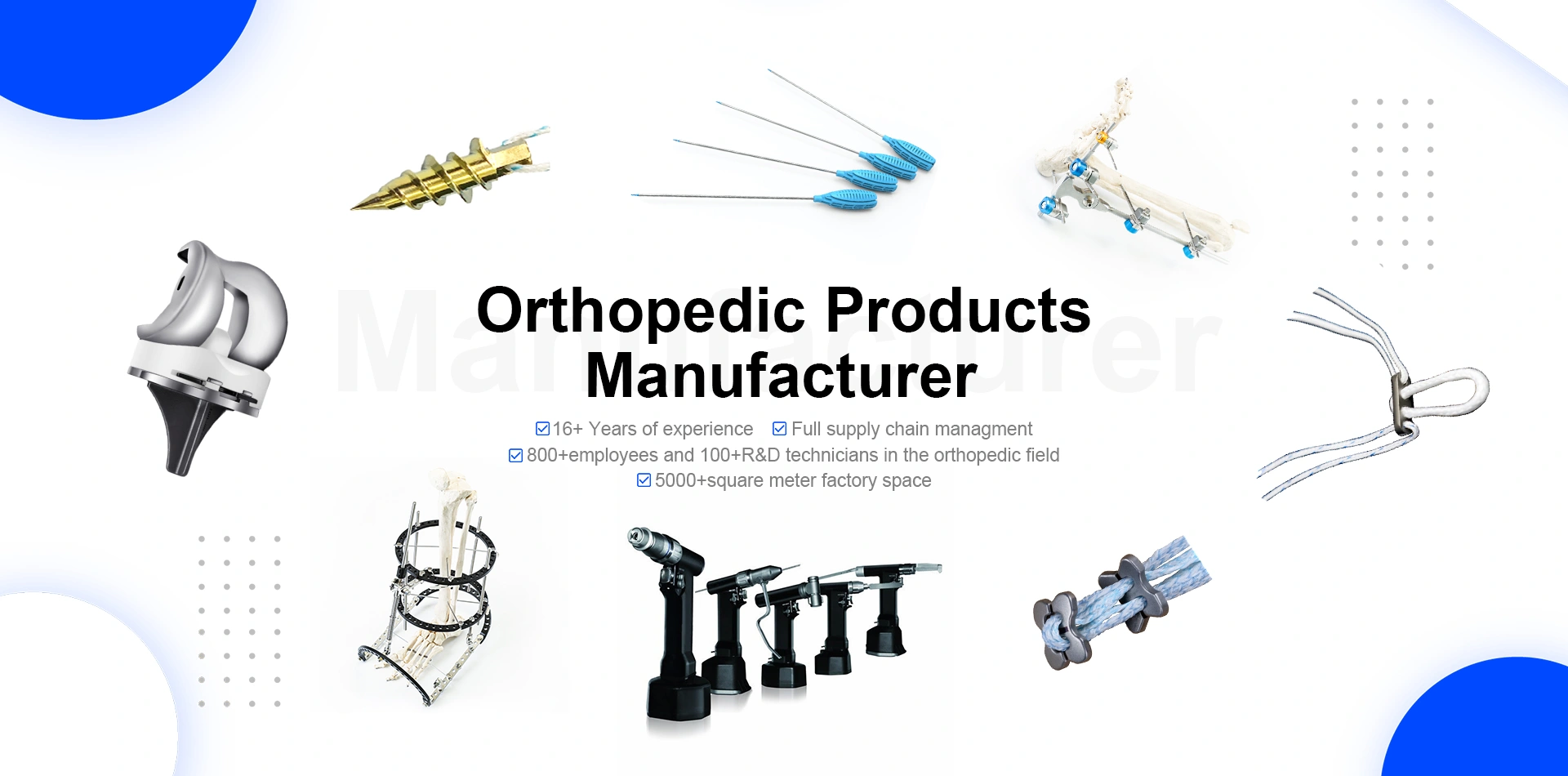
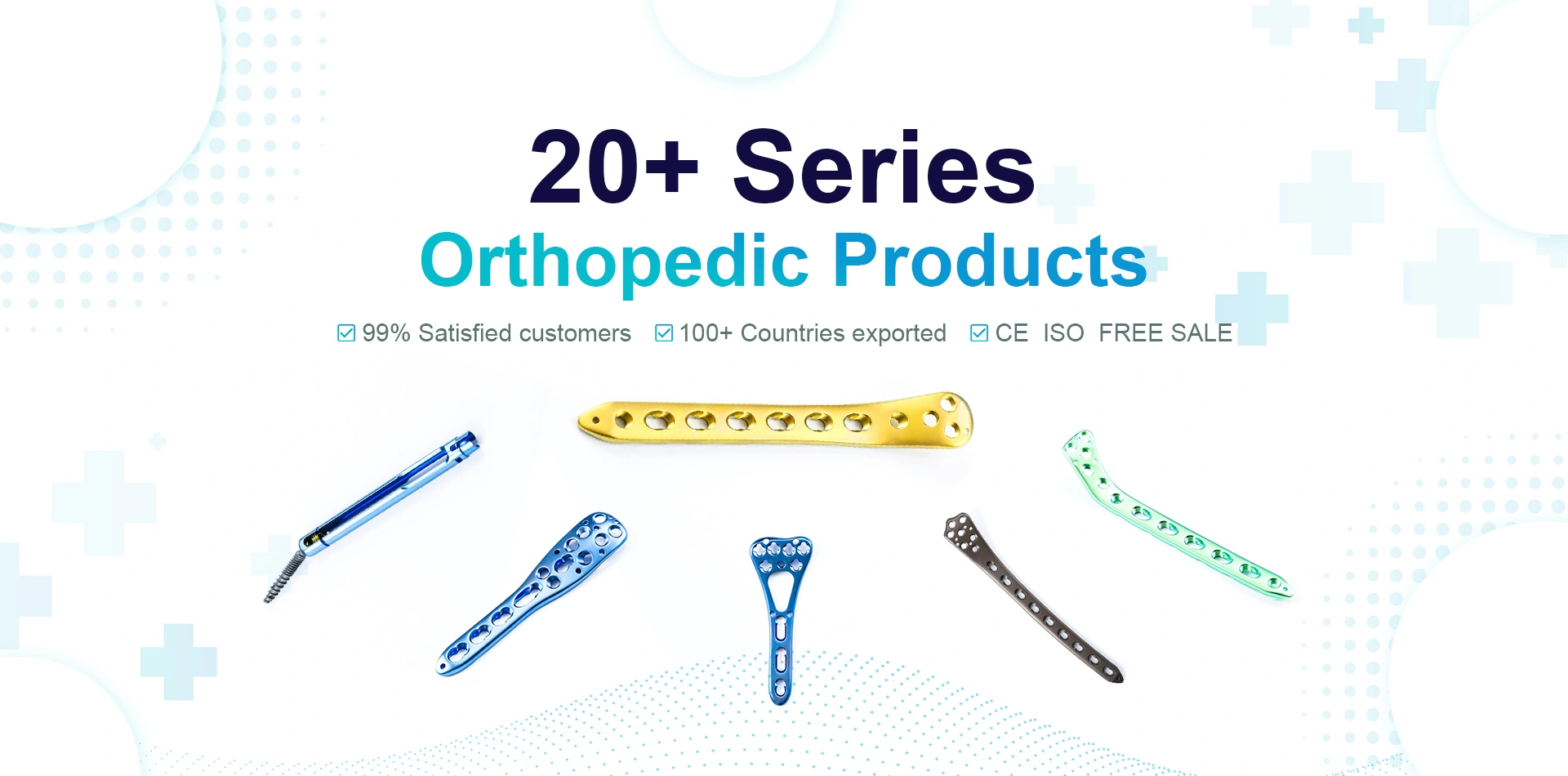
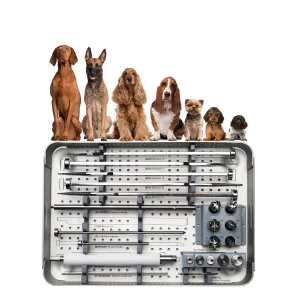
With over 18 years of dedicated research and development, Clerivida has developed 11 main product series, including spinal systems, intramedullary nail systems, trauma plates and screws, locking plates and screws, CMF maxillofacial systems, external fixation devices, joint replacement systems, medical power tools, general surgical instrument sets, sterilization boxes & baskets, and veterinary orthopedic solutions. Each series is designed with precision, safety, and innovation in mind, catering to diverse medical applications globally.
Guided by the principle of "quality first, service first, R&D first, innovation first," the company has earned an excellent reputation both domestically and internationally. Customer satisfaction remains the cornerstone of Clerivida’s service philosophy, emphasizing sincere service, continuous improvement, attention to detail, and integrity.
With a professional after-sales team and a pioneering spirit, Clerivida continues to provide reliable, high-quality orthopedic solutions while building long-term partnerships with clients worldwide. The company remains committed to innovation, excellence, and advancing the orthopedic medical industry.
For global medical brands, navigating orthopedic device development demands tight alignment between engineering and regulatory compliance. Our OEM/ODM structure provides custom product solutions that optimize this process. We support design changes across multiple configurations:
Clients can select from medical-grade Titanium Alloys (Ti6Al4V ELI according to ASTM F136) for superior biocompatibility and reduced elastic modulus mismatch with bone tissue, or high-purity Cobalt-Chromium alloys (CoCrMo according to ASTM F75) for dynamic load-bearing joint structures.
We customize knee configurations based on regional surgical preferences, supporting both Cruciate-Retaining (CR) designs, which preserve the patient's posterior cruciate ligament, and Posterior-Stabilized (PS) designs, which use a cam-and-post mechanism to replace the structural function of missing ligaments.
To enhance long-term implant stability and limit reliance on bone cement, we offer advanced surface finishes, including porous titanium plasma spray, hydroxyapatite (HA) bioactive coatings, and micro-grooved patterns that encourage natural bone integration.
Expanding into international markets requires adhering to strict regulatory standards. Each region enforces distinct quality and compliance rules. Our operations align with major regulatory frameworks to facilitate smooth market entry:
Our production facility operates under strict ISO 13485 quality standards, with all manufacturing procedures, cleanroom protocols, and sterilization validation histories fully documented to simplify CE (MDR) registration and FDA 510(k) applications.
Every component design undergoes rigorous stress testing. This includes fatigue testing of the tibial tray under ISO 14801, shear force testing of modular joints, and simulator wear testing exceeding 5 million cycles to ensure long-term durability in active patients.
The next generation of joint reconstruction is defined by digitization, robotic integration, and smart materials. Our long-term R&D roadmap focuses on three primary innovations:
Integrating direct metal laser sintering (DMLS) to print customized titanium structures that mimic human trabecular bone, optimizing early-stage implant stability and bone integration.
Refining instruments to ensure compatibility with global robotic surgical platforms, allowing real-time tracking, accurate alignment, and bone preservation during joint arthroplasty.
Developing bio-inert sensor matrices designed to measure intra-articular pressure changes, load distribution, and temperature indicators, providing clinicians with post-operative tracking data.
Orthopedic implants rely on precise coordination between implant geometry and surgical instruments. Clerivida provides integrated systems designed for various clinical applications:
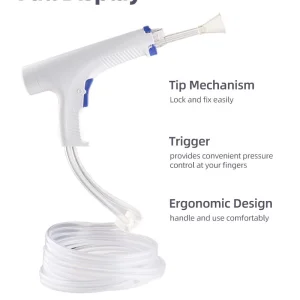
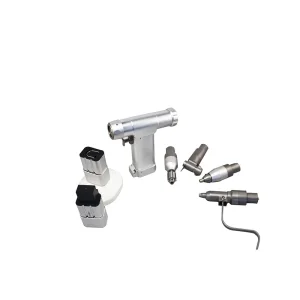
To streamline surgical workflows, we provide customized surgery kits, high-performance bone drills, saw attachments, and specialized sterile containers that keep tools organized and ready for use in the operating room.
 Clerivida Medical