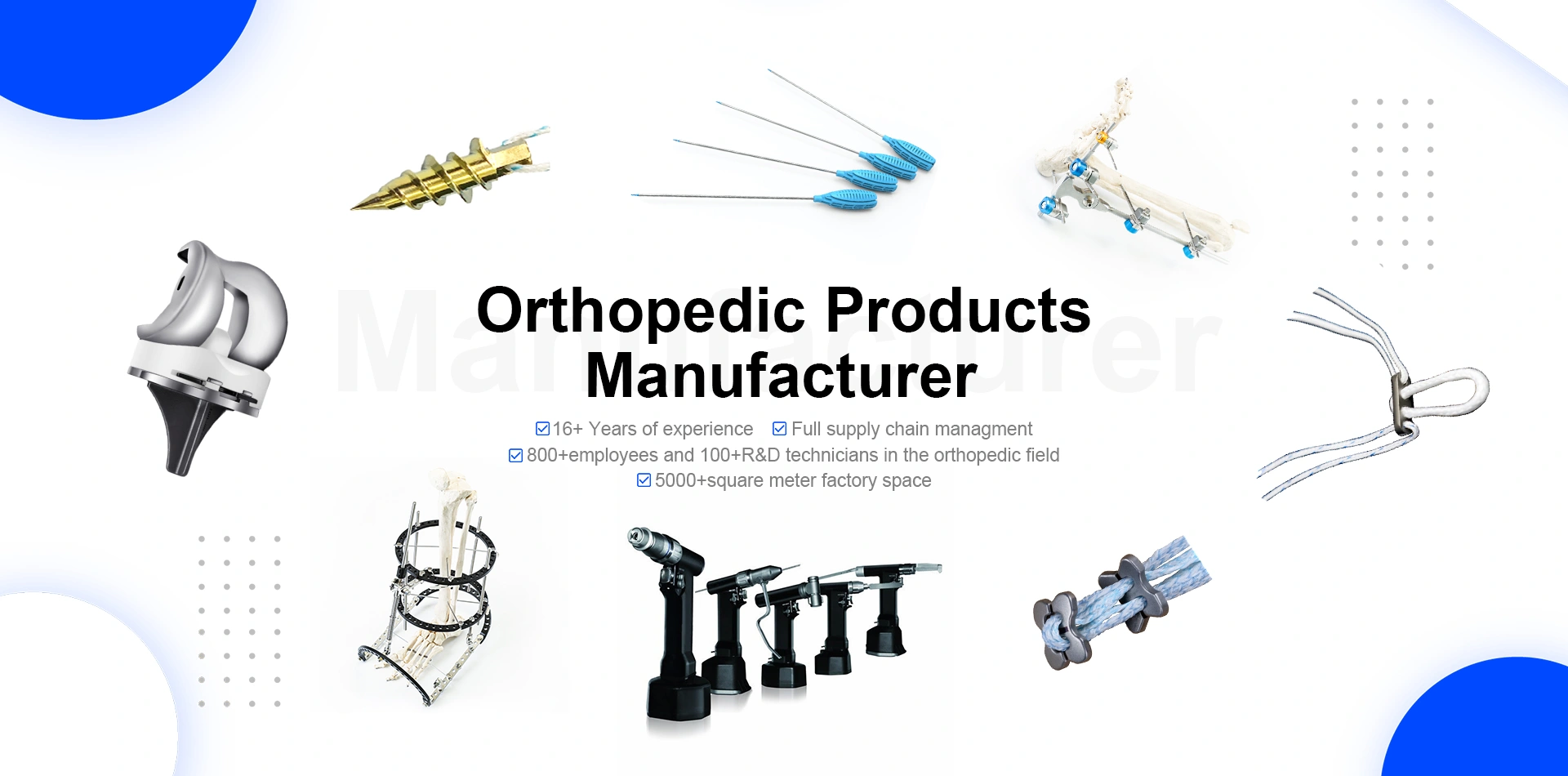
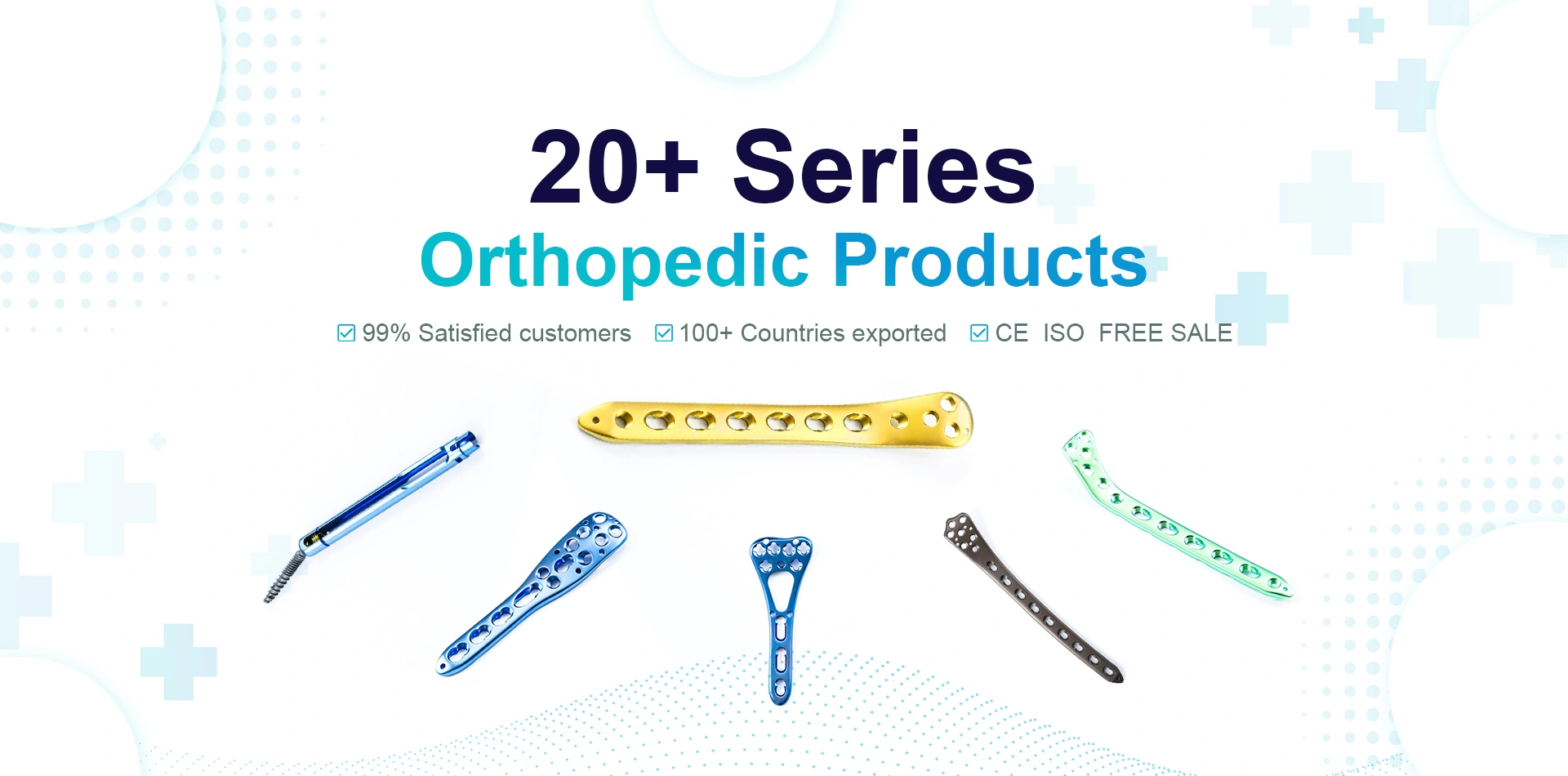
Guangzhou Clerivida Medical Co., Ltd. is a leading manufacturer specializing in orthopedic implants and surgical instruments, offering a comprehensive model of research and development, production, sales, and export. The company has established a perfect quality management system and advanced production capabilities, ensuring every product meets international standards.
With over 18 years of dedicated research and development, Clerivida has developed 11 main product series, including spinal systems, intramedullary nail systems, trauma plates and screws, locking plates and screws, CMF maxillofacial systems, external fixation devices, joint replacement systems, medical power tools, general surgical instrument sets, sterilization boxes & baskets, and veterinary orthopedic solutions. Each series is designed with precision, safety, and innovation in mind, catering to diverse medical applications globally.
Guided by the principle of "quality first, service first, R&D first, innovation first," the company has earned an excellent reputation both domestically and internationally. Customer satisfaction remains the cornerstone of Clerivida’s service philosophy, emphasizing sincere service, continuous improvement, attention to detail, and integrity.
With a professional after-sales team and a pioneering spirit, Clerivida continues to provide reliable, high-quality orthopedic solutions while building long-term partnerships with clients worldwide. The company remains committed to innovation, excellence, and advancing the orthopedic medical industry.
In posterior spinal instrumentation, the stability of pedicle screw-rod systems is paramount to achieving successful arthrodesis. While bilateral rod configurations provide excellent resistance to flexion and extension, they are inherently vulnerable to torsional (rotational) and shear stresses. This biomechanical vulnerability can lead to construct failure, screw loosening, or pseudarthrosis, particularly in long-segment reconstructions and deformity corrections.
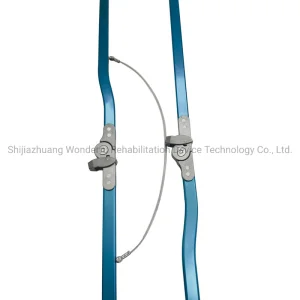
Spinal Cross Connectors (transverse stabilizers) serve as the vital mechanical bridge that links the bilateral longitudinal rods into a closed-loop frame. By transforming two independent parallel rods into a structural truss, crosslink systems significantly enhance the overall construct's torsional stiffness. Biomechanical studies indicate that adding cross connectors can increase rotational stability by up to 44%, dramatically reducing micromotion at the bone-implant interface.
The primary function of a spinal cross connector is to counter the "parallelogramming" effect—a condition where lateral forces shift the bilateral rods parallel to each other, compromising the construct's lateral stability. Modern crosslink designs resolve this by introducing fixed or variable bridging components:
Designed for straightforward, standard anatomy cases where the distance between rods is uniform. These feature a solid, single-body design that provides maximum mechanical rigidity but offers less intraoperative versatility.
These dynamic systems offer telescopic adjustment to match varying inter-rod distances (e.g., 30mm to 75mm) and multi-axial joint heads to clamp onto divergent or convergent rods. Ideal for complex deformities.
Engineered to minimize post-operative soft tissue irritation. Advanced locking mechanisms (set-screws or sleeve-locks) ensure secure fixation with minimal protrusion over the longitudinal rod line.
The global spinal implants market is witnessing an accelerated demand for high-strength, biocompatible materials. As a premier hub for high-precision manufacturing, China has consolidated its position by utilizing advanced metallurgy and swiss-type CNC machining. Premium manufacturers like Guangzhou Clerivida Medical Co., Ltd. leverage state-of-the-art materials to satisfy this demanding sector:
Industrial production relies heavily on raw material traceability. For every batch of medical titanium, mill test reports (MTR) and chemical analysis certificates are verified before entering cleanrooms to guarantee compliance with international regulatory bodies.
Exporting complex medical devices demands stringent adherence to regulatory guidelines across multiple jurisdictions. Clerivida maintains an end-to-end quality assurance program matching these compliance targets:
Clerivida also supports global distributors by facilitating local registration processes in regional markets (e.g., COFEPRIS in Mexico, ANVISA in Brazil, and local registrations in Southeast Asia and Middle Eastern nations).
Spinal crosslinks are not one-size-fits-all components; their intraoperative application depends highly on the clinical pathology being treated:
In multi-level deformity corrections, vertebral rotation is common. Clerivida's variable-angle crosslinks allow surgeons to lock divergent rods securely without applying pre-stress forces to the pedicle screws.
Unstable thoracic and lumbar burst fractures require maximum posterior construct stiffness. Deploying double crosslink systems (proximal and distal) secures the constructs against high mechanical impact.
Following corpectomy or total en-bloc spondylectomy, structural support is heavily reduced. Strong mechanical bridging is vital to prevent longitudinal rod fatigue failure during the long fusion process.
As spine surgery advances toward Minimally Invasive Spine Surgery (MISS) and robotic navigation, the design parameters of spinal hardware are evolving:
 Clerivida Medical